

【明慧之窗記者周慧文編輯】為了幫助更多人了解法輪功的基本事實與真相,我們整理了101個最常被提到的問題與答案。希望讀者能以理性、平和的心態閱讀。
Below are a collection of answers we have provided as reference to 101 questions people commonly ask about Falun Gong.
(接前文)
五、關於歷史與傳播
Part 5. History and Introduction
45. 法輪功是如何開始傳播的?
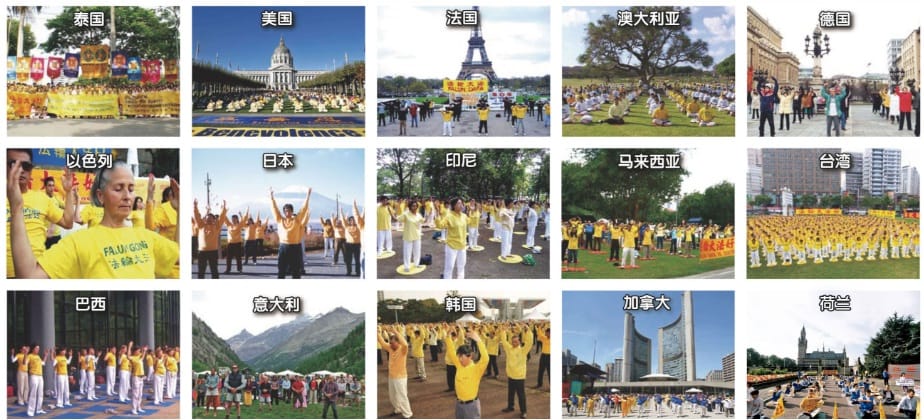
答:一九九二年五月,李洪志先生在吉林長春開始傳授法輪功,後應中國氣功協會與各地氣功協會邀請舉辦面授培訓班。一九九五年起從法國和瑞典開始傳向海外。至二零二五年,在包括美國在內的170多個國家都有人學煉法輪功;法輪功的主要書籍已被翻譯成50多種語言。
45. How was Falun Gong introduced?
A: In May 1992, Mr. Li Hongzhi began teaching Falun Gong in Changchun, Jilin Province, China. He later held in-person training sessions at the invitation of the China Qigong Association and qigong associations across China. Mr. Li first taught Falun Gong overseas in France and Sweden in 1995. By 2025, Falun Gong was practiced in over 170 countries, and its main texts have been translated into more than 50 languages.
46. 法輪功為甚麼傳播如此快速?
答:由於法輪功簡單易學、免費傳授,且修煉者身心受益,通過口耳相傳,迅速傳播至170多個國家,吸引上億人修煉。
46. Why did Falun Gong spread so quickly?
A: Because Falun Gong is easy to learn, taught for free, and beneficial to practitioners’ health and well-being, it spread rapidly through word of mouth to more than 170 countries and attracted a hundred million practitioners.
47. 法輪功為甚麼在中國早期受到支持?
答:一九九零年代初,法輪功因促進健康、節省醫療費用及推廣傳統文化而獲政府認可,如一九九二年東方健康博覽會法輪功被授予「明星功派」獎,一九九三年東方健康博覽會,李洪志先生獲大會最高獎「邊緣科學進步獎」,以及「受群眾歡迎氣功師」稱號。
47. Why did Falun Gong gain support in China in its early days?
A: In the early 1990s, Falun Gong was recognized by the Chinese government for improving health and reducing medical expenses, and because it promoted traditional culture. At the 1992 Oriental Health Expo, Falun Gong earned the Star Qigong award. At the 1993 Oriental Health Expo, Mr. Li Hongzhi won the conference’s highest award, the Frontier Science Progress Award, and the title of Most Popular Qigong Master.

48. 法輪功的組織形式是甚麼?
答:法輪功組織鬆散,無正式會員制,無專職神職人員或捐贈要求,主要通過義工自發組織的煉功點運作。
48. Does Falun Gong have an organizational structure?
A: Falun Gong is loosely organized with no formal membership system, no full-time clergy, and no tithing. It mainly operates through practice sites organized by volunteers.
49. 法輪功的學員群體有哪些特點?
答:學員遍布各年齡、各階層、各人種、各種職業和不同的文化背景,包括但不限於農民、工人、教師、學生、學者、工程技術人員、軍人、商人、藝術家等行業。美國一項調查顯示,法輪功學員中博士、碩士及專業人士比例高。
49. Who practices Falun Gong?
A: Practitioners are of all ages, social classes, races, occupations, and cultural backgrounds, including but not limited to farmers, workers, teachers, students, scholars, engineers, military personnel, businesspeople, and artists. A survey in the United States showed that a high proportion of Falun Gong practitioners hold advanced degrees and are professionally accomplished.
50. 法輪功最初是在哪裏傳出的?
答:法輪功於一九九二年在中國吉林省長春市首次公開傳出。一九九二年五月,李洪志先生在長春舉辦第一期講法班。最初以「氣功」形式出現,參加人數不斷增長。此後迅速擴展到北京、天津、大連等大城市。
50. Where was Falun Gong first introduced?
A: Mr. Li Hongzhi gave the first lecture in Changchun, Jilin Province, China in May 1992. Presented as a form of qigong, Falun Gong quickly became popular and attracted people in major Chinese cities like Beijing, Tianjin, and Dalian.
51. 為何法輪功在一九九零年代的中國迅速傳播?
答:因其健身效果明顯、修心理念獨特,受到廣泛認可。許多人長期病症改善,健康狀況提升。真、善、忍價值觀讓修煉者在人際關係中獲益,找到做人的指南。官方媒體早期正面報導,推動了傳播。
51. Why did Falun Gong spread rapidly in China in the 1990s?
A: Falun Gong gained widespread recognition for its significant health benefits and unique philosophy of spiritual cultivation. Many people see improved health after taking up the practice. The values of Truthfulness-Compassion-Forbearance benefit practitioners in their interpersonal relationships and provide them with guidance for their lives. Early positive coverage by official media fueled its spread.
52. 中共政府早期對法輪功持何態度?
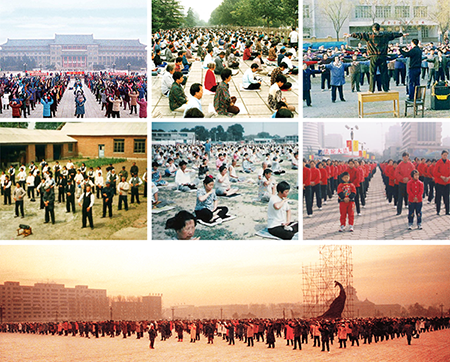
答:早期中國政府對法輪功給予肯定。中共黨員,包括各級官員,也學煉法輪功並因此得到身心健康。迫害開始前,中國平均10人中就有1人在煉法輪功。
一九九三年八月,中宣部和公安部聯合召開第三次全國見義勇為先進分子表彰大會,會議專門邀請李洪志先生為與會的先進分子做免費康復治療,效果顯著。為此,中華見義勇為基金會發出了《中華人民共和國公安部致中國氣功科學研究會感謝信》,對李洪志先生及法輪功的神奇祛病健身功效進行高度肯定。
一九九三年北京的東方健康博覽會,李大師獲得博覽會最高獎「邊緣科學進步獎」和大會的「特別金獎」,以及「最受歡迎氣功師」稱號。
一九九八年五月,中國國家體育總局局長親赴法輪功發祥地長春考察。當晚,中央電視台第一套節目《晚間新聞》和第五套節目分別播出廣大群眾修煉法輪功的盛況,時間大約10分鐘。
一九九八年九月,國家體總抽樣調查法輪功修煉人12,553人,疾病痊癒和基本康復率為77.5%,加上好轉者人數20.4%,祛病健身有效率總數高達97.9%。平均每人每年節約醫藥費1700多元,每年共節約醫藥費2100多萬元。
一九九八年七月十日,《中國經濟時報》以《我站起來了!》為題,長篇報導河北邯鄲家庭婦女謝秀芬,癱瘓在床16年,修煉法輪功後恢復行走能力的事情。
一九九八年八月二十八日,《中國青年報》以《生命的節日》為題介紹一九九八年中國瀋陽亞洲體育節上,1500人的法輪功隊伍的良好表現和法輪功的健身效果。
一九九八年十一月十日,中國廣州《羊城晚報》以《老少皆練法輪功》為題報導了廣州烈士陵園等處法輪功煉功點5000人的大型晨煉。並報導了「原患高位癱瘓,全身70%部位麻木失靈,大小便失禁」的廣州迪威皮革有限公司統計員林嬋英,修煉法輪功後徹底康復,現在「紅光滿面,煉功的動作靈活自如」。該報導還配發了93歲老人和兩歲小孩煉法輪功的照片,並介紹說,目前廣東有近25萬人修煉法輪功,法輪功強調傳功不收費,義務教功。
一九九七年三月十七日,中國《大連日報》載文《無名老者默默奉獻》,報導了這樣一件事情:一位叫盛禮劍的古稀老人,利用一年時間,默默為村民修了四條路,全長約1100米。當人們問他是哪個單位、給多少錢時,老人說:「我是學法輪功的,為大夥兒做點好事不要錢。」
一九九八年二月十六日《北京日報》「讀者來信」版,表揚了一位不留姓名的北京人,將8萬元錢捐給了蘭州化學公司化工研究院,用於大西北的科研建設;10萬元捐給中國石油勘探開發科學研究院廊坊分院。這位北京人說:他通過修煉法輪功,對人生的意義、人的追求及心性修養等有了新的理解,才決定去做這些捐獻。北京人民廣播電台「人生熱線」也專門就此事及法輪功做過長達一個多小時的詳細報導。
一九九八年二月二十一日,中國《大連晚報》報導大連海軍艦艇學院學員袁紅存,二月十四日下午從大連自由河冰下三米,救出一名掉進冰窟窿的兒童,被稱為「活著的羅盛教」,並被學院榮記二等功。當時袁紅存已經修煉法輪功兩年。
一九九八年下半年,前人大委員長喬石為首的部分人大離退休幹部,在對法輪功做了長達數月的詳細調查後,得出結論:「法輪功於國於民有百利而無一害。」

52. What was the Chinese government’s early attitude towards Falun Gong?
A: The Chinese government initially supported Falun Gong. Many Chinese Communist Party members and government officials were practicing Falun Gong and saw their health improve as a result. Before the persecution began, it was estimated that one in 13 people in China practiced Falun Gong.
In August 1993, the Central Propaganda Department and the Ministry of Public Security jointly held the Third National Conference to Commend Outstanding Individuals for Acts of Courage. The conference invited Mr. Li Hongzhi to provide free rehabilitation treatment to attendees, with remarkable results. In response, the China Outstanding Individuals for Courage Foundation issued a “Letter of Appreciation from the Ministry of Public Security of the People’s Republic of China to the China Qigong Science Research Association,” highly commending Mr. Li Hongzhi and Falun Gong’s health benefits.
At the 1993 Oriental Health Expo in Beijing, Master Li won the Expo’s highest award, the Frontier Science Progress Award, the conference’s Special Gold Award, and the title of Most Popular Qigong Master.
In May 1998, the director of China’s State Sports General Administration visited Changchun, the birthplace of Falun Gong. That evening, CCTV’s Evening News and CCTV Channel 5 broadcast approximately ten minutes of footage of people practicing Falun Gong.
In September 1998, the National Sports General Administration conducted a sample survey of 12,553 Falun Gong practitioners. Among the respondents, 77.5% reported being cured or nearly completely recovered, and another 20.4% reported improvement in their health. The total effectiveness rate for healing and improving health thus reached 97.9%. On average, each practitioner saved over 1,700 yuan in medical expenses each year, for a total of over 21 million yuan.
On July 10, 1998, China Economic Times published a lengthy article titled “I Stood Up!” about Xie Xiufen, a homemaker from Handan City, Hebei Province, who was paralyzed for 16 years and regained the ability to walk after she started practicing Falun Gong.
On August 28, 1998, China Youth Daily published an article titled “Festival of Life” to introduce the excellent performance of the 1,500-member Falun Gong exercise demonstration group at the 1998 Asian Sports Festival in Shenyang, China, and the health-promoting effects of Falun Gong.
On November 10, 1998, China’s Yangcheng Evening News, under the headline “Young and Old Practice Falun Gong,” reported on a large-scale morning exercise session involving 5,000 people at Falun Gong practice sites, including the Guangzhou Martyrs’ Cemetery. The report also reported on Lin Chanying, a statistician at Guangzhou’s Diwei Leather Co., who previously suffered from paralysis, numbness and loss of function in 70% of her body, as well as incontinence. She completely recovered after practicing Falun Gong and was “radiant with a rosy complexion, and her exercise movements were fluent and effortless.”
The report also included photos of a 93-year-old woman and a two-year-old child practicing Falun Gong. The report also stated that nearly 250,000 people in Guangdong Province practiced Falun Gong and that Falun Gong is always taught for free.
On March 17, 1997, China’s Dalian Daily published an article titled “An Unknown Elder’s Silent Dedication.” The article featured a man in his 70s named Sheng Lijian who quietly built four village roads within a year, totaling approximately 1,100 meters. When asked who he worked for and how much he was paid, he replied, “I’m a Falun Gong practitioner. I do this good deed for free.”
On February 16, 1998, the “Readers’ Letters” section of the Beijing Daily praised an anonymous Beijing resident for donating 80,000 yuan to the Lanzhou Chemical Company’s Chemical Research Institute for scientific research and development in Northwest China, and 100,000 yuan to the Langfang Branch of the China Petroleum Exploration and Development Research Institute. This Beijing resident said that practicing Falun Gong gave him a new understanding of the meaning of life, human pursuit, and the cultivation of one’s xinxing, leading him to make these donations. The Beijing People’s Broadcasting Station’s “Life Hotline” program also ran a detailed report, lasting over an hour, on this matter and Falun Gong.
On February 21, 1998, China’s Dalian Evening News reported that Yuan Hongcun, a student at the Dalian Naval Academy, rescued a child who had fallen into an ice hole three meters below the surface of the Freedom River on the afternoon of February 14. Yuan was praised and awarded a second-class merit by the academy. Yuan had practiced Falun Gong for two years at the time.
In the second half of 1998, a group of retired National People’s Congress (NPC) officials, led by former NPC Chairman Qiao Shi, conducted a detailed investigation of Falun Gong over a period of several months and concluded that Falun Gong was beneficial to China and its people and did not pose any harm.
53. 為何後來法輪功在中國受到殘酷打壓?
答:法輪功因祛病健身和社會回升的顯著效果,群眾基數迅速擴大。至一九九九年,學員人數據估達7000萬~1億。真、善、忍信仰獨立於中共思想和政治體系之外,其威望和獨立性讓江澤民感到無比嫉妒和惱火。
53. Why was Falun Gong later suppressed in China?
A: Falun Gong’s effectiveness in resolving illnesses, improving health, and elevating morality rapidly expanded its base. By 1999, estimates put the number of practitioners between 70 and 100 million. Falun Gong’s independence from the CCP’s ideological and political system fueled then CCP leader Jiang Zemin’s jealousy and irritation.
54. 為何法輪功吸引世界各地學員?
答:因其簡單易學且注重身心提升。功法動作柔和,適合各年齡層。經文清楚說明修心原理。修煉者普遍反映身心健康與道德改善。
54. Why does Falun Gong attract practitioners from all over the world?
A: Falun Gong is easy to learn and focuses on physical and mental well-being. The exercises are gentle and suitable for all ages. The teachings explain the principles of cultivating one’s mind. Practitioners generally report improvement in their physical, mental, and moral health.
55. 法輪功是否收費?
答:法輪功全球免費教功,教材、講法錄音和教功視頻均在網上公開免費觀看。初學者入門常見的九天學習班由志願者組織,不收學費。各地煉功點都是自願性質,免費參加,來去自由。
55. Does Falun Gong require any fees?
A: No. Falun Gong practitioners worldwide teach the exercises free of charge. The instructional materials, lecture recordings, and exercise videos are all available online for free. The nine-day introductory classes for beginners are typically organized by volunteers and are also free of charge. Practice sites are voluntary and free to attend, and participants are welcome to come and go as they wish.
56. 法輪功是否要求捐款?
答:法輪功不要求捐款,也無籌資機制。各地活動均由志願者自發組織。法輪大法網站提供所有教材免費下載。沒有會費或財務依賴結構。
但是近幾年中國大陸來美國旅遊的學員經常想把回國前剩下的錢捐給國外大法項目。為了不叫學員隨便收捐款,因此有的項目成立了基金會。由於中共邪黨的政策的改變,中國人很難出國,加上中國的經濟被搞壞,所以基本上沒怎麼運作,沒甚麼收入。這完全是為了避免亂收捐款而做的。
56. Does Falun Gong ask for donations?
A: Falun Gong does not solicit donations and has no fundraising mechanism. Activities are organized by volunteers. All instructional materials are available for free on the official website, and there are no membership fees.
In recent years, some practitioners traveling abroad from mainland China expressed a wish to donate their leftover foreign currency to projects run by practitioners. A foundation was formed to manage donations properly and discourage practitioners from accepting funds on their own. However, due to the CCP’s policy changes and the decline in China’s economy, the foundation has had minimal activity and little income. It was created entirely to avoid collecting donations in a disorderly or improper manner.
57. 法輪功對待金錢的態度是甚麼?
答:反對以修煉為手段謀取金錢。所有教材免費公開,學功不收費。強調淡泊名利。
57. How does Falun Gong approach the subject of money?
A: We choose not to use spiritual cultivation as a means to make money. All teaching materials are free and available to the public, and there is no fee to learn the exercises. Its practitioners are taught to let go of attachments to fame and fortune.
58. 法輪功是否組織對外募款?
答:法輪功學員舉辦的所有活動依靠自願支持。煉功點與真相點由學員自發維護。
58. Does Falun Gong raise funds externally?
A: All activities organized by Falun Gong practitioners rely on voluntary support. Practice sites and information booths are maintained by practitioners of their own initiative.
(待續)
(To be continued......)
【關聯文章】
關於法輪功的101個提問(中英文對照版)
關於法輪功的101個提問(完整版)
世界需要真善忍
【延伸閲讀】
憶李洪志大師北京傳法 (3) 兩届東方健康博覽會 法輪功轟動京城
【聽文章】歷史見證法輪功的美好
紐約華裔詩人:李大師用慈悲教化人
認識「明慧網」
23年五份調查:證實法輪功的奇效
培養專注力 東西方兩位教師有妙招
一位職場精英女士的人生起落
吸毒十幾年墜深淵 毒癮青年遇轉捩點
不治自癒 現代醫學無解的奇蹟
【延伸閲讀・專輯】
奇書《轉法輪》
尋找生活希望的故事
尋找生命意義的故事
幸福家庭系列
幸福婚姻秘訣
絕處逢生
▌在線閱讀各語種《轉法輪》:https://www.falundafa.org/
▌線上免費學習班 :https://chinese.learnfalungong.com/
▌天梯書店:https://www.tiantibooks.org/
明慧網原文:
https://big5.minghui.org/mh/articles/2025/8/31/關於法輪功的101個提問-498990.html
https://en.minghui.org/html/articles/2025/10/4/230454.html
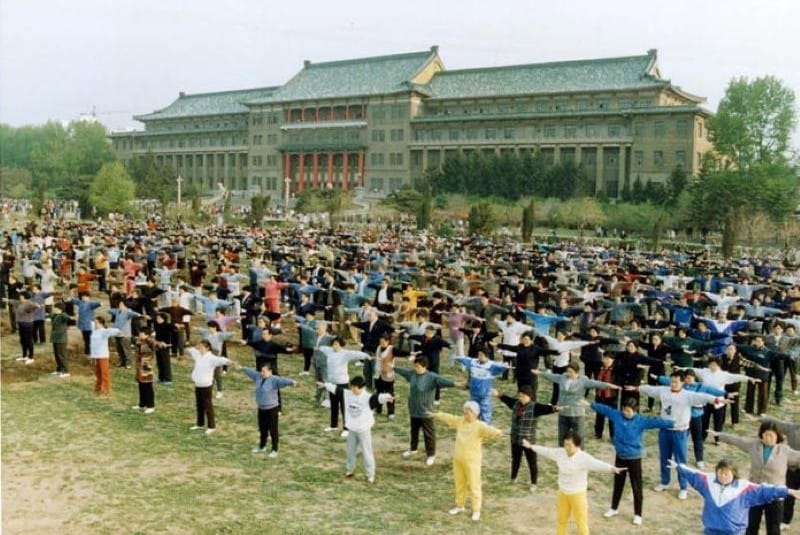
(本文圖片來源:明慧網;主圖説明:一九九九年以前,在長春市文化廣場,即原長春地質宮,長春大法弟子集體煉功場面。)
世局紛亂、災異頻仍、真假難辨⋯⋯
尋覓中,訪問明慧之窗,讓善良與光明注入心田。
感謝您支持明慧之窗!